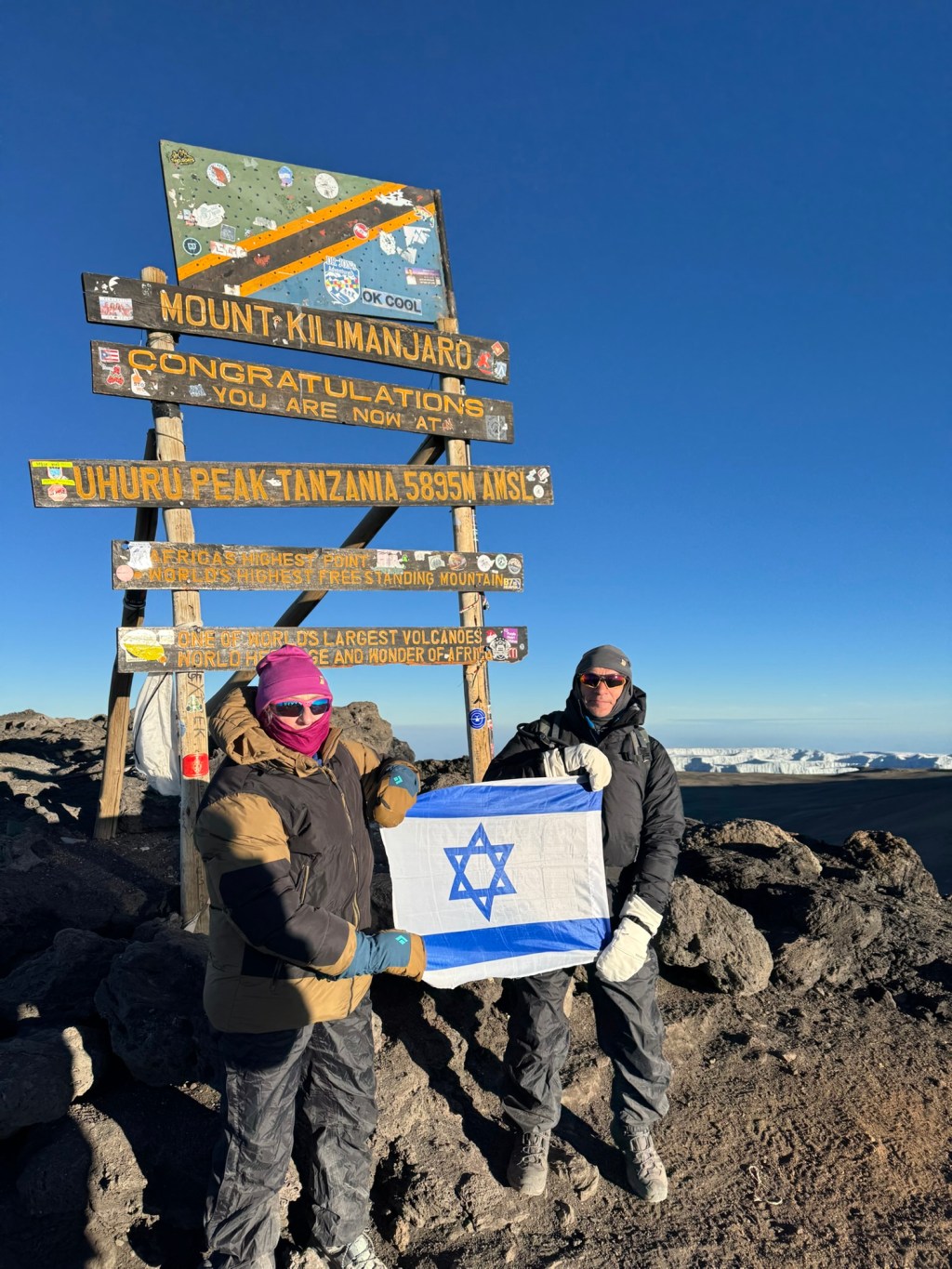
Our first retirement adventure
We are a couple living in Israel who just retired after many years of developing medical ultrasound systems.
The Kilimanjaro adventure was the first item on our bucket list. We successfully summited on October 13, 2026, and here are our daily notes and some pictures. Hopefully, some of these tips will be useful for anyone considering climbing Kili.
Day 1
We met our team from Habari Adventure: a crew of 10 people, including a lead guide, an assistant guide, a chef (our “stomach engineer”), and 7 porters.
In Swahili, Habari is a friendly greeting (like “How are you?”). Later, we learned their motto: “Habari Team Never Lose!”
Early in the morning, we drove to the Machame Gate at an elevation of 1,800 meters. Originally, we booked the Lemosho route, which is recommended for better altitude acclimatization, but due to wildfires, we were rerouted to the Machame route.
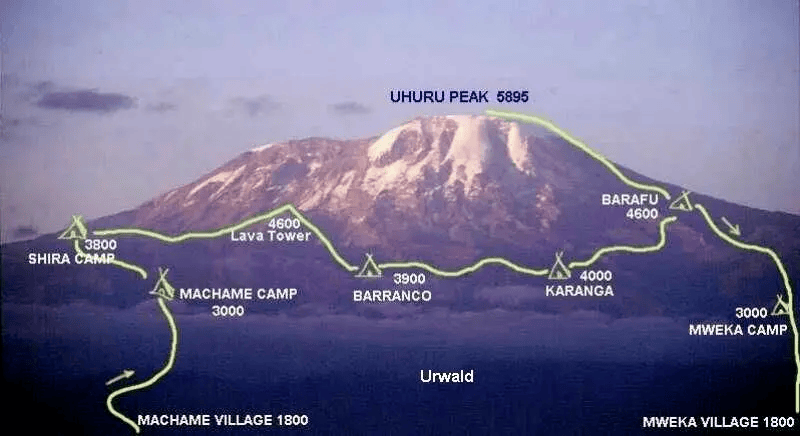
After finishing all the paperwork at the gate, we started hiking. We were the first team to leave the gate that day and the first to arrive at Machame Camp at an elevation of 3,020 meters.
We followed an “early bird” strategy: waking up at 5:00 or 5:30 AM and starting our hike by 7:00 AM or earlier. This allowed us to enjoy the trek without the crowds and avoid “traffic jams.”
The entire trail for this day was in the rainforest—which was literally a rain forest, with the rain not stopping for almost four hours.
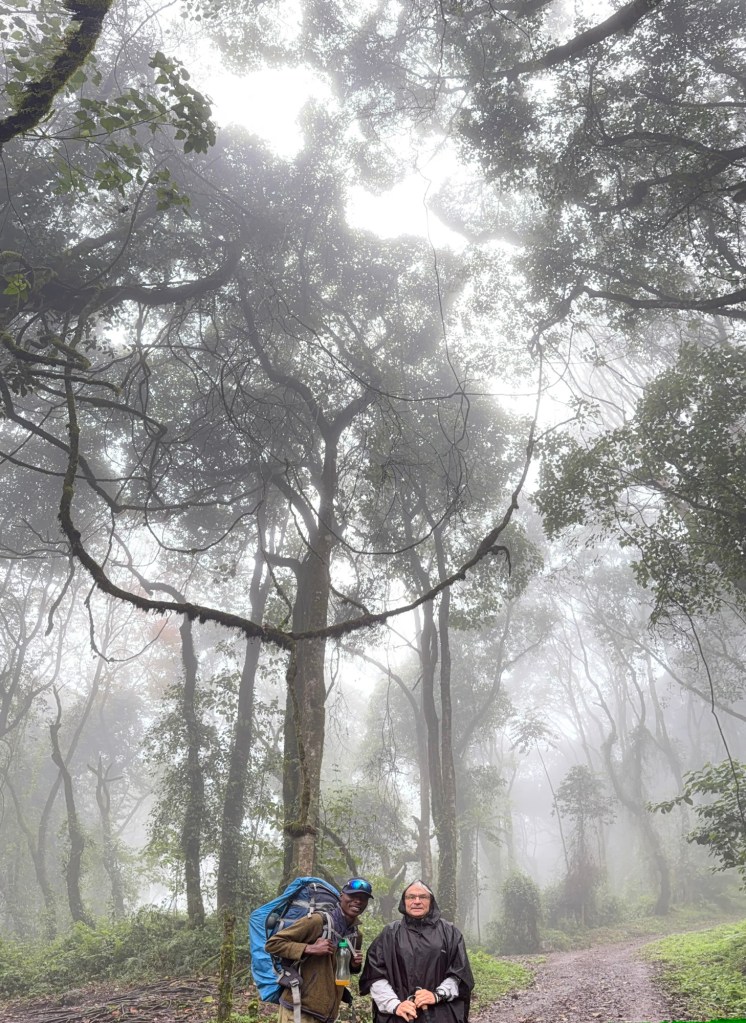
Fortunately, the ponchos provided by Habari were really helpful. Actually, we loved the weather; the rain and the fog covering the trees gave us the feeling of being in a fairytale forest.
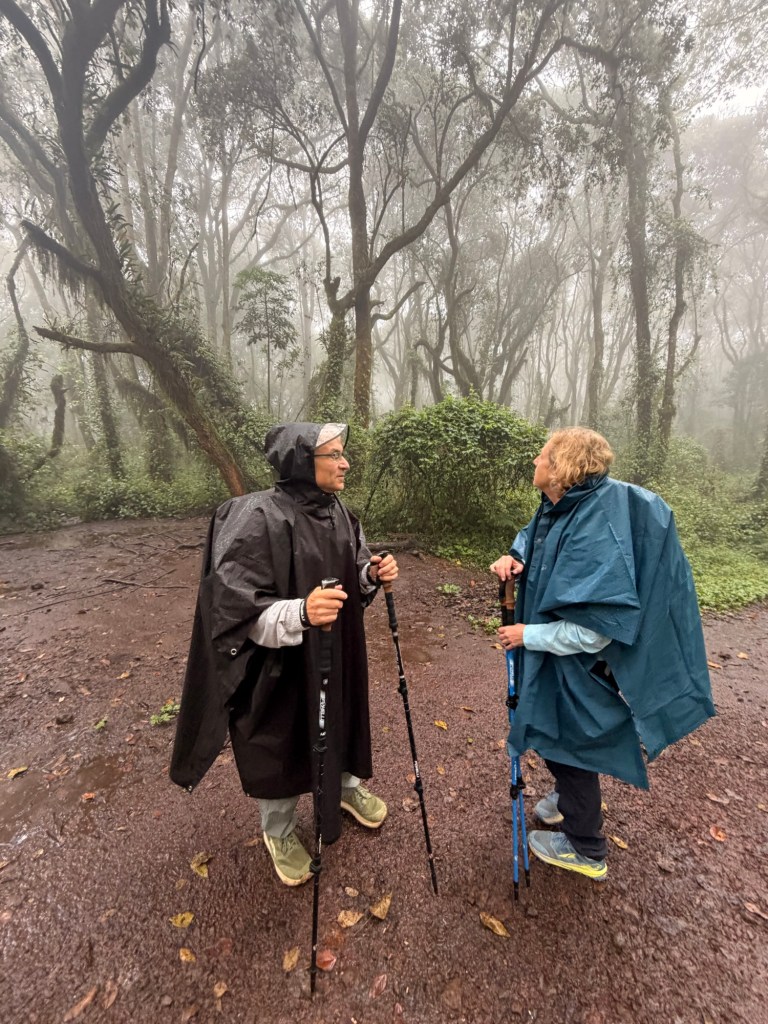
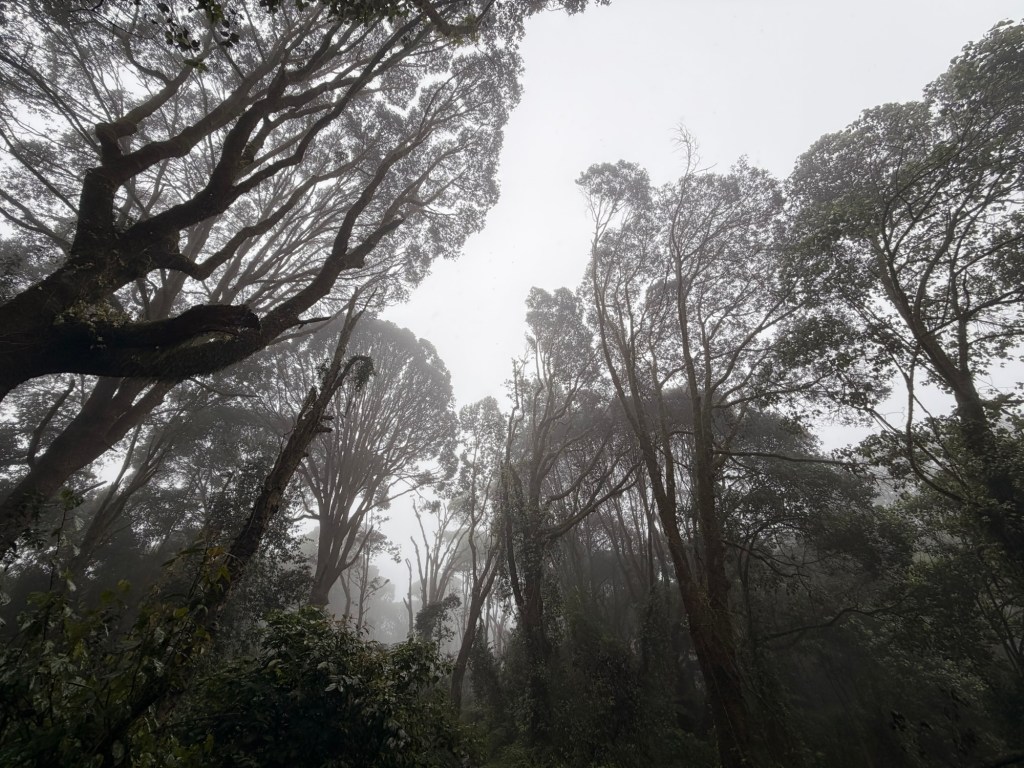
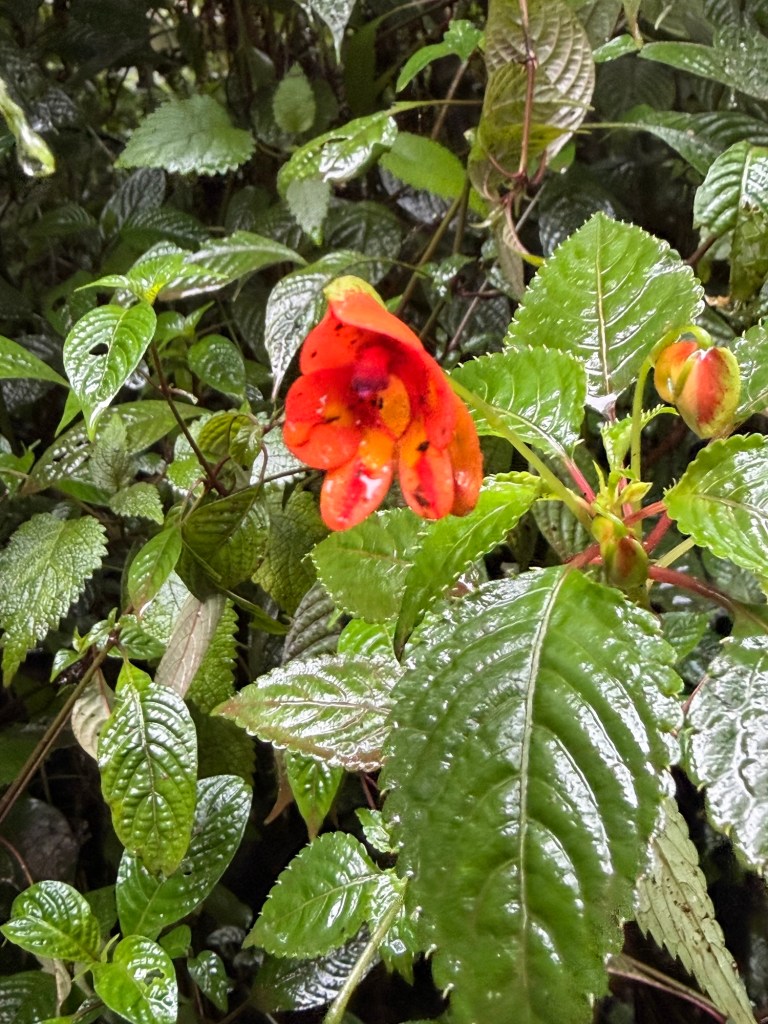
On our way, we learned about several local plants and flowers:
boiled-egg flower
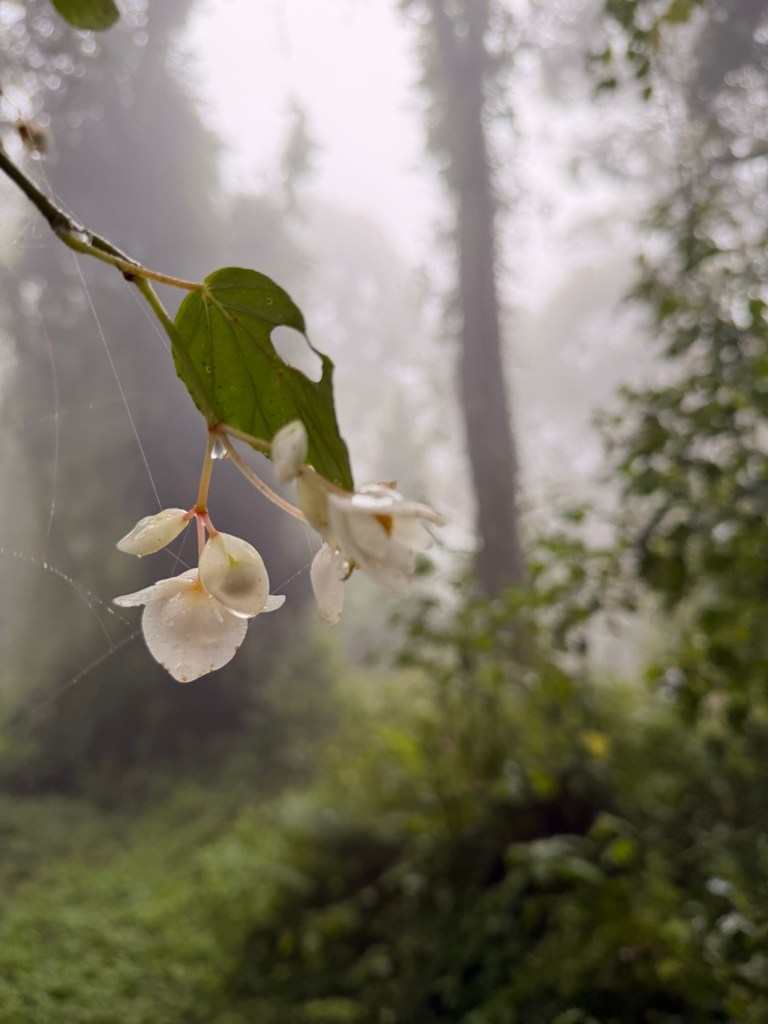
Impatients Kilimanjari endemic flower
Dracaena afromontana, an important plant for the Chagga people (its leaves can be used to ask for forgiveness).
We also saw huge redwood trees, which are the hardest wood in Tanzania.
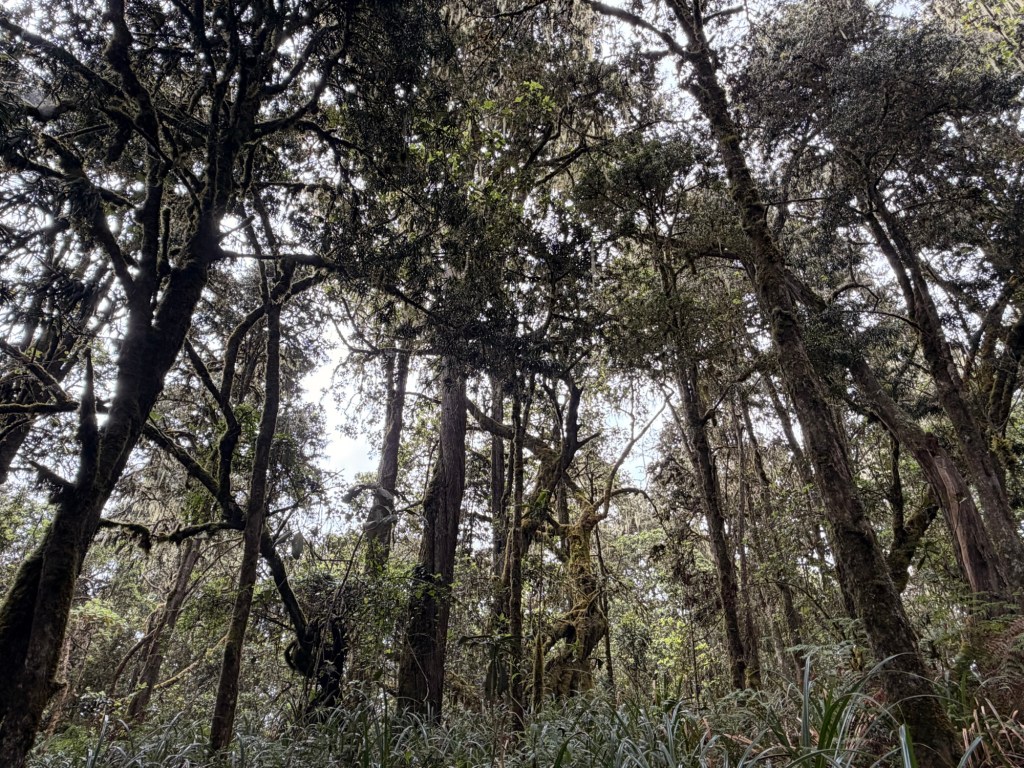
We caught glimpses of black-and-white and blue monkeys. They were busy doing their own thing and had no interest in us, unlike their begging relatives in Thailand.
After more than 5 hours of hiking (~13 km with a 1,200-meter elevation gain), we arrived at Machame Camp. Our GPS showed an altitude of 3,020 meters, though the old camp sign reads 2,835 meters.
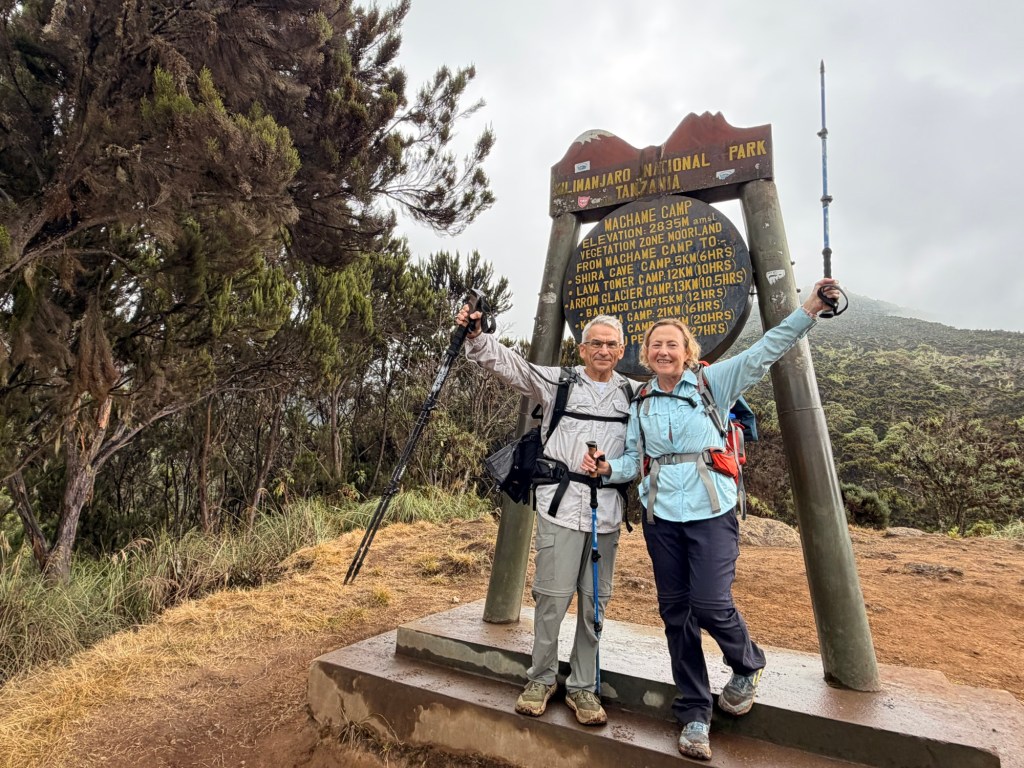
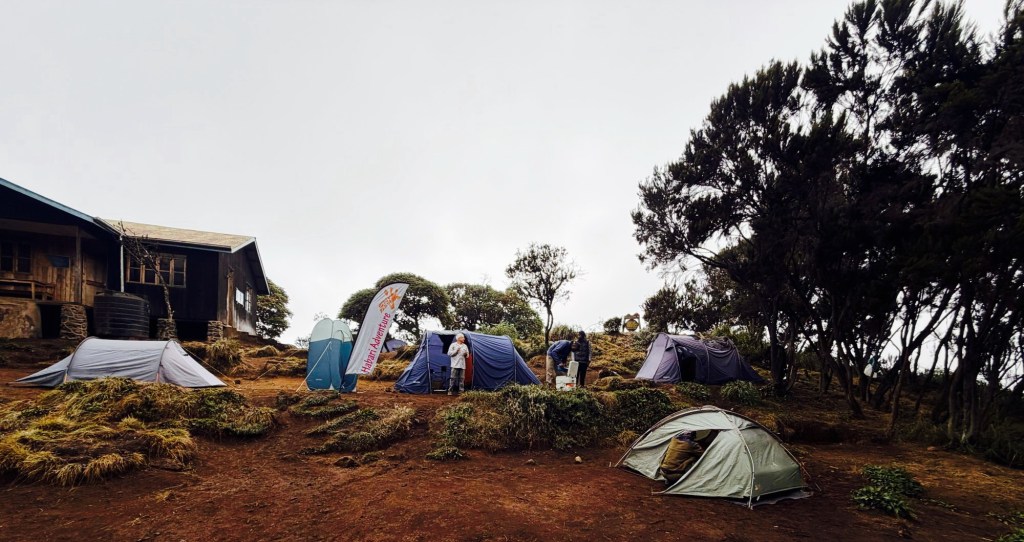
We found our tents pitched in a wonderful spot thanks to our porters, who had arrived much earlier.
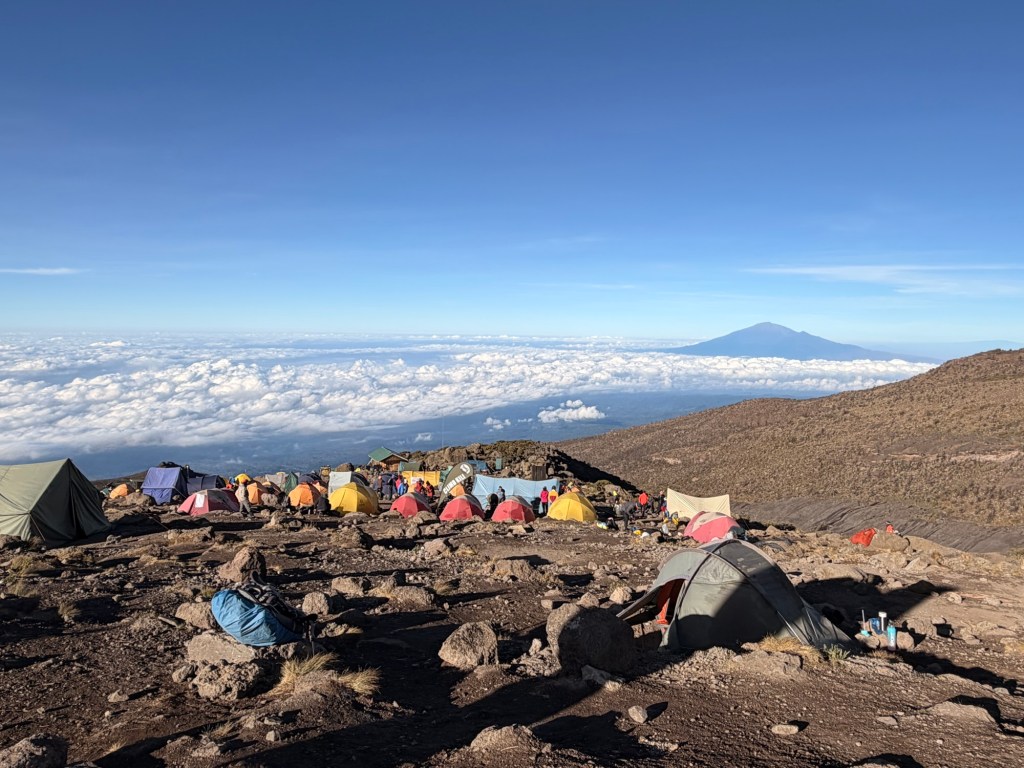
We were wowed by the level of service we received at the camp. Our tent had two spaces: a bedroom area and a dining area complete with a table and chairs.
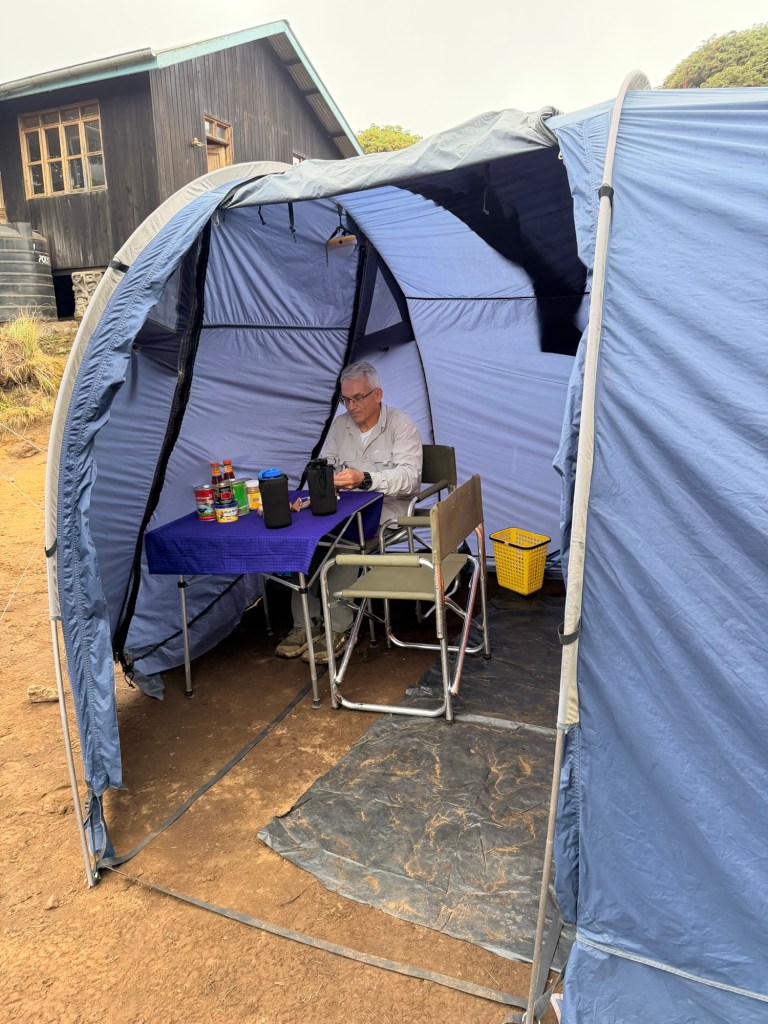
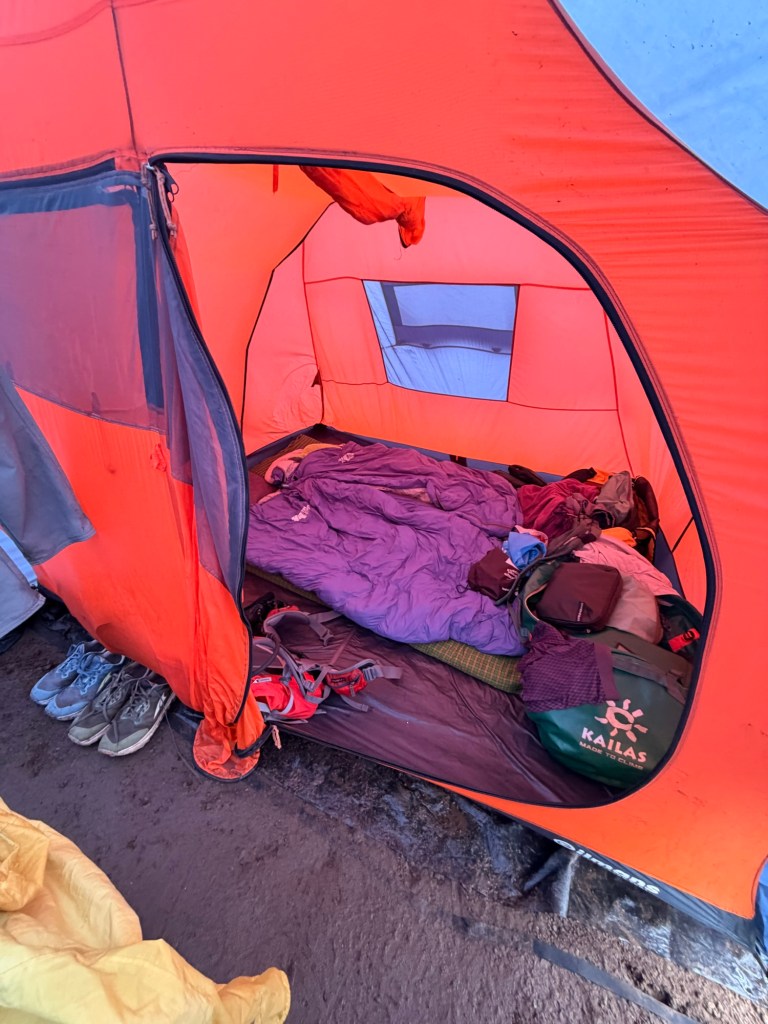
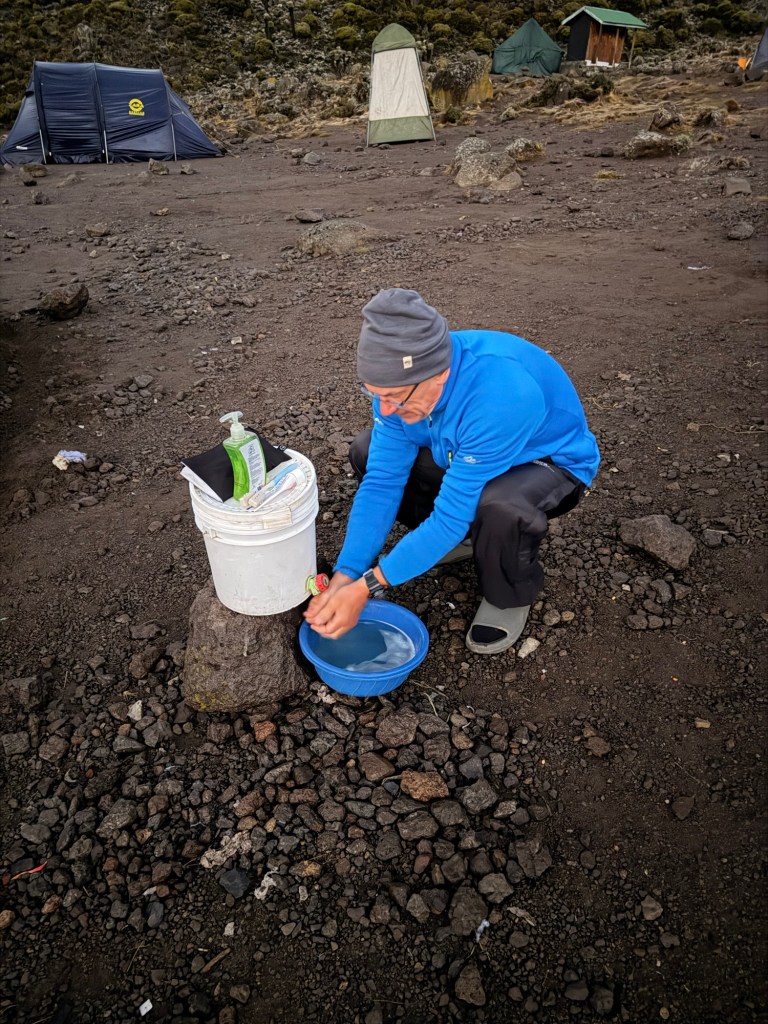
Upon arrival, we were provided with hot water for washing, hot tea, and popcorn.
While walking around the camp, we noticed a group of porters huddled together on the highest spot, deeply engrossed in their phones. It was the best place to catch a cellular connection for text messages only. It was pretty much the same at all the camps, meaning we were mostly disconnected (which wasn’t actually a bad thing).
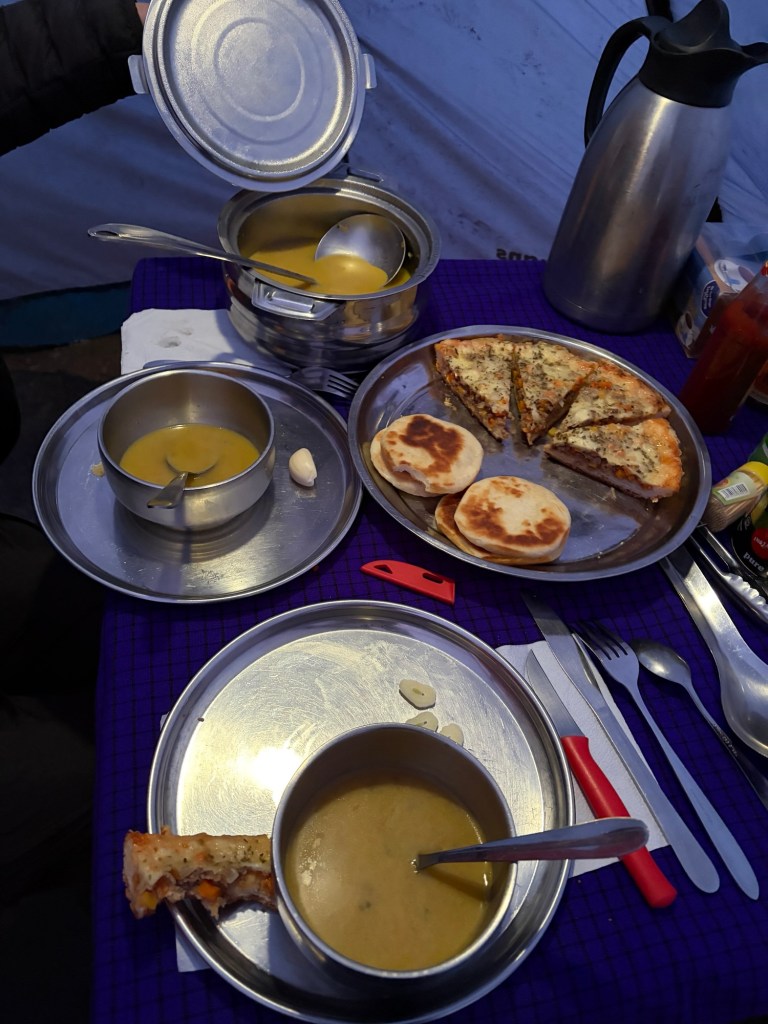
We were served a delicious dinner consisting of a soup, a main course, and a salad. The menu changed every day, and it’s still unbelievable to us how the chef prepared such meals inside a tent on a mountain!
Day 2
Machame Camp (3,020 m) – Shira Cave Camp (3,850 m)
At the end of Day 1, our guides Miko and G came to our tent to go over the plan for Day 2, share impressions and emotions from the first day, and perform a medical check. The check included measuring oxygen saturation and heart rate, as well as asking about fatigue, stomach feelings, and any medication taken. We felt well throughout the entire trip, with zero signs of altitude sickness and oxygen saturation hovering around 90–94%, which is completely normal for that altitude.
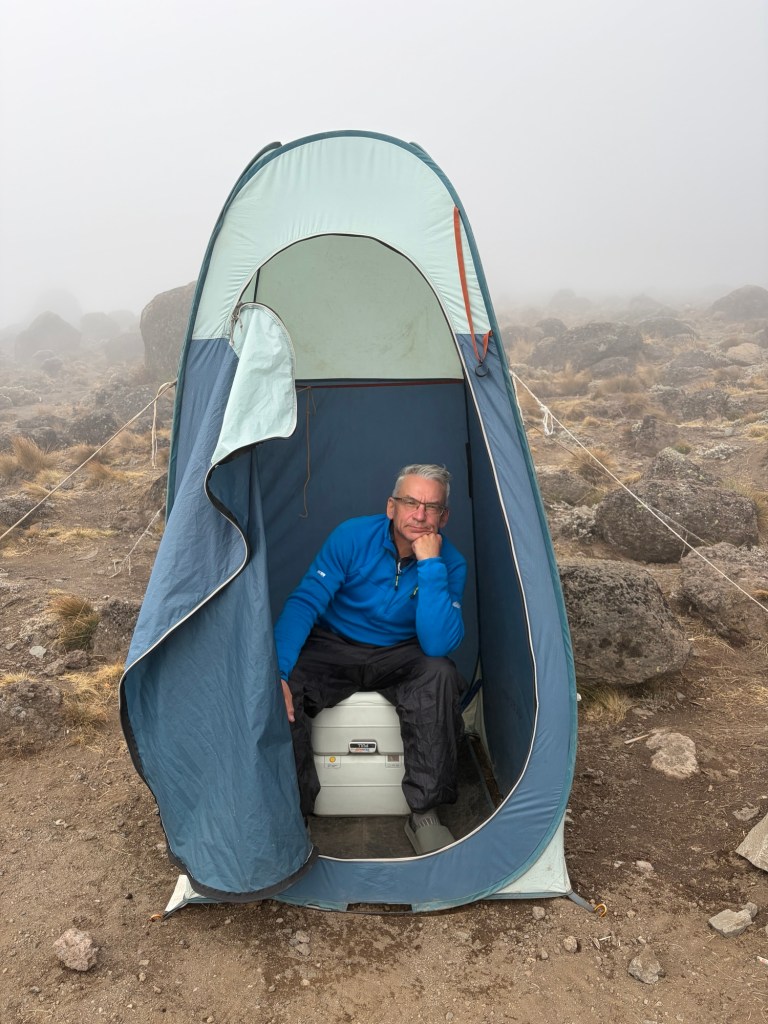
We started taking Diamox one day before the trek: half a pill after breakfast and another half after lunch. Here is why it’s important: when climbing, you breathe more intensively, which reduces the concentration of CO_2 in your blood and makes it more alkaline (higher pH). This causes cerebral blood vessels to constrict, reducing blood flow to the brain and triggering altitude headaches. Diamox shifts the pH back to normal by helping the kidneys excrete bicarbonate, by increased urination. Having our own private mobile toilet was an absolute game changer because of the inevitable “Diamox call” in the middle of every single night!
We also added raw garlic to our routine (one clove at lunch and another at dinner)—a tip we learned from Nepalese porters. Garlic helps thin the blood, which tends to thicken at high altitudes due to the body producing more red blood cells. Thinner blood makes it much easier for the heart to pump.
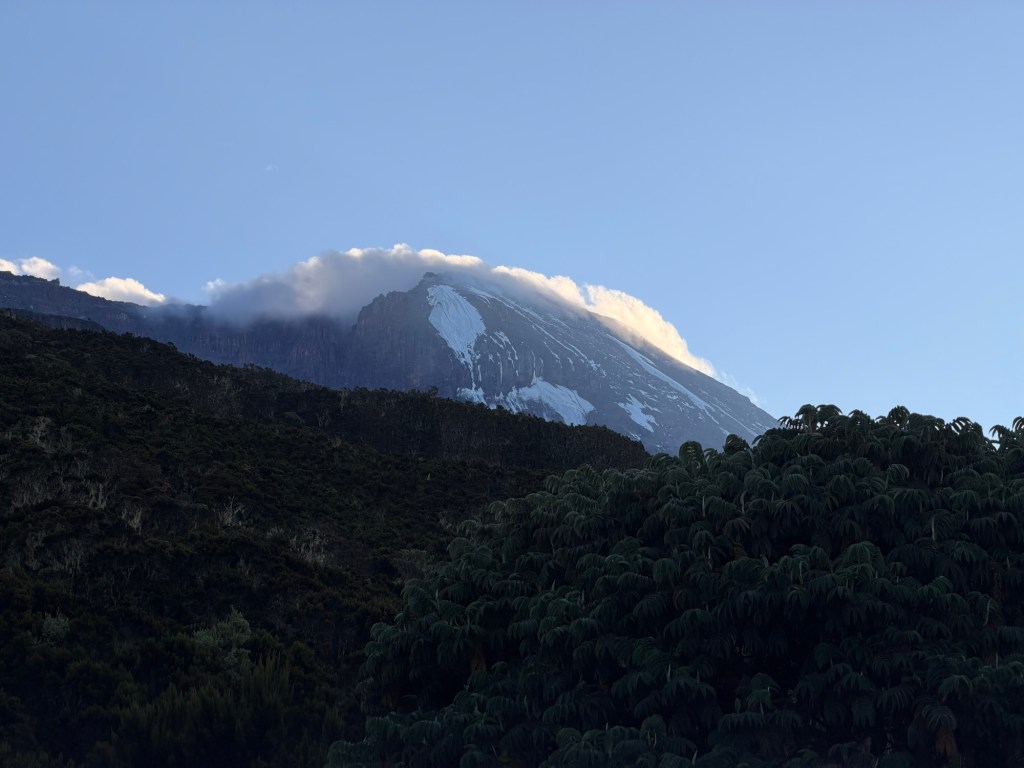
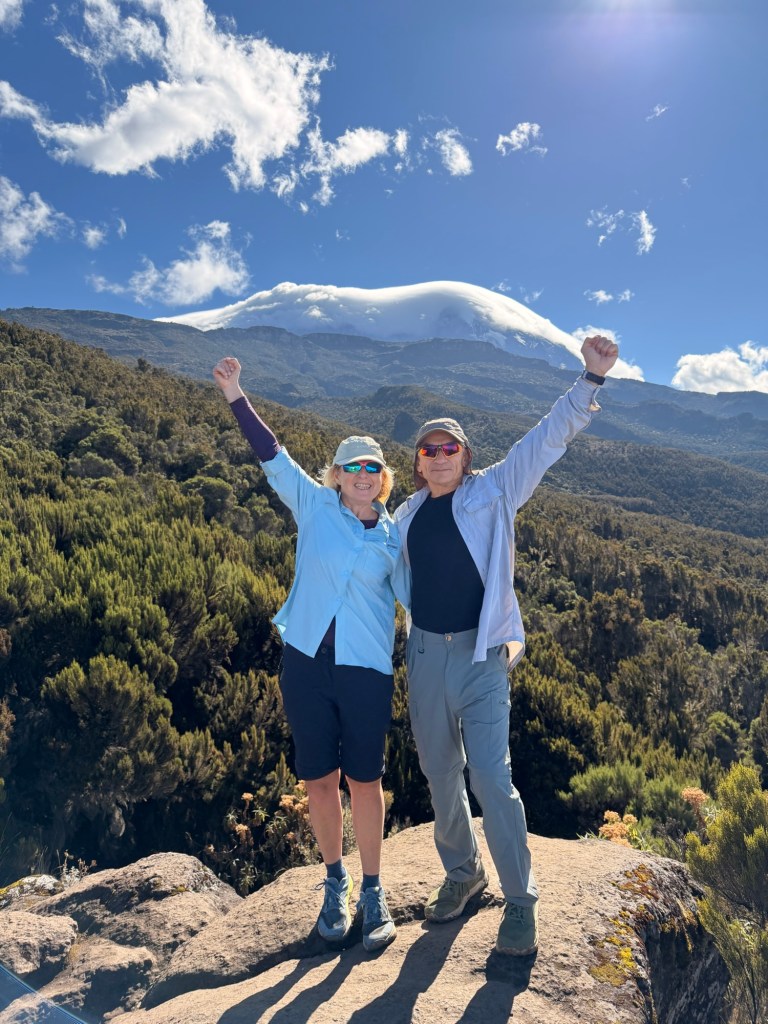
We woke up to a clear blue sky and caught our first glimpse of the top of Kilimanjaro.
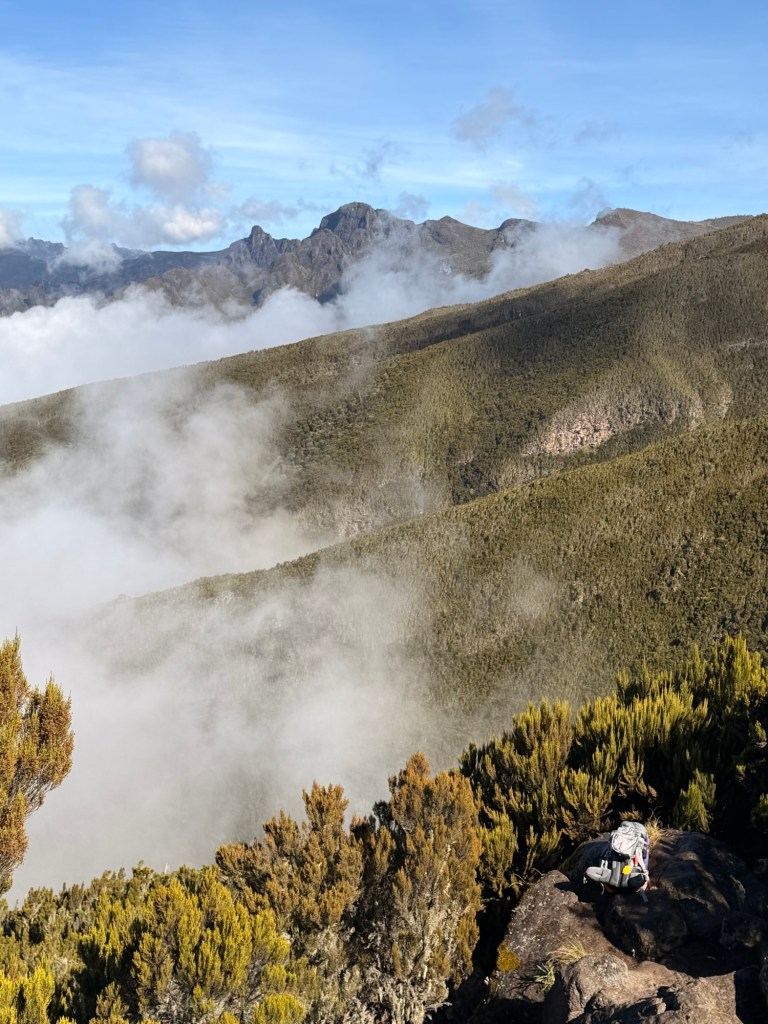
Today we hiked through the moorland zone with its steep, rocky slopes,
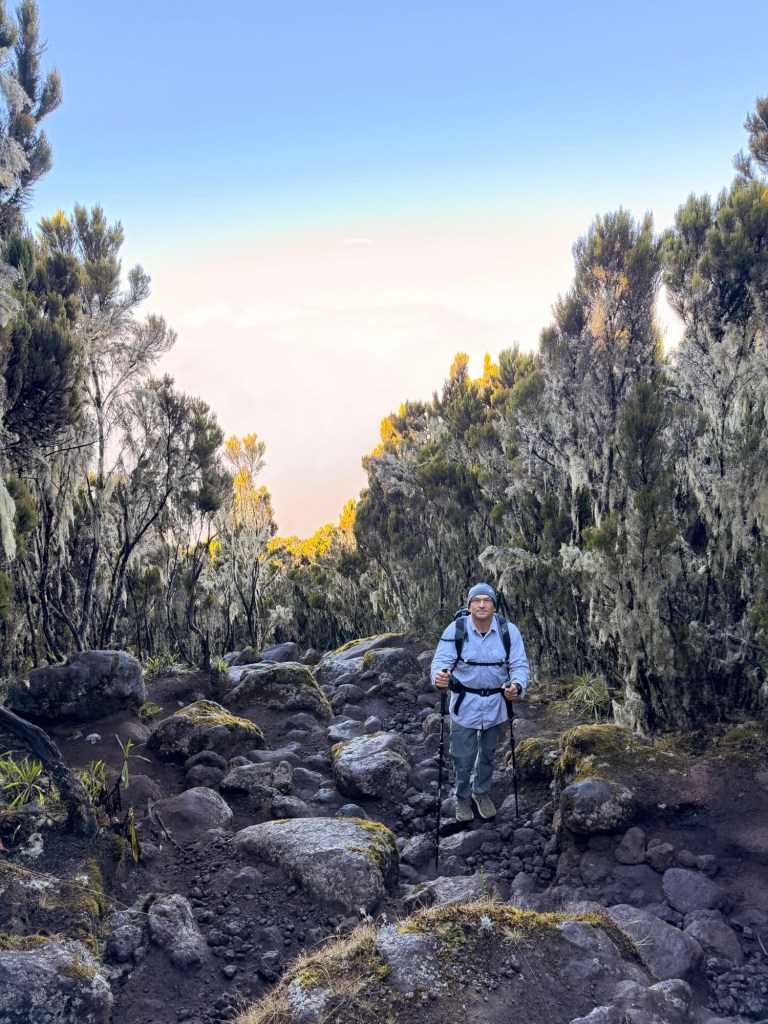
which were well worth the effort for the magnificent views.
We encountered a few more fascinating endemic plants, like the Lobelia (which, when closed in the dark, looks exactly like a pineapple)
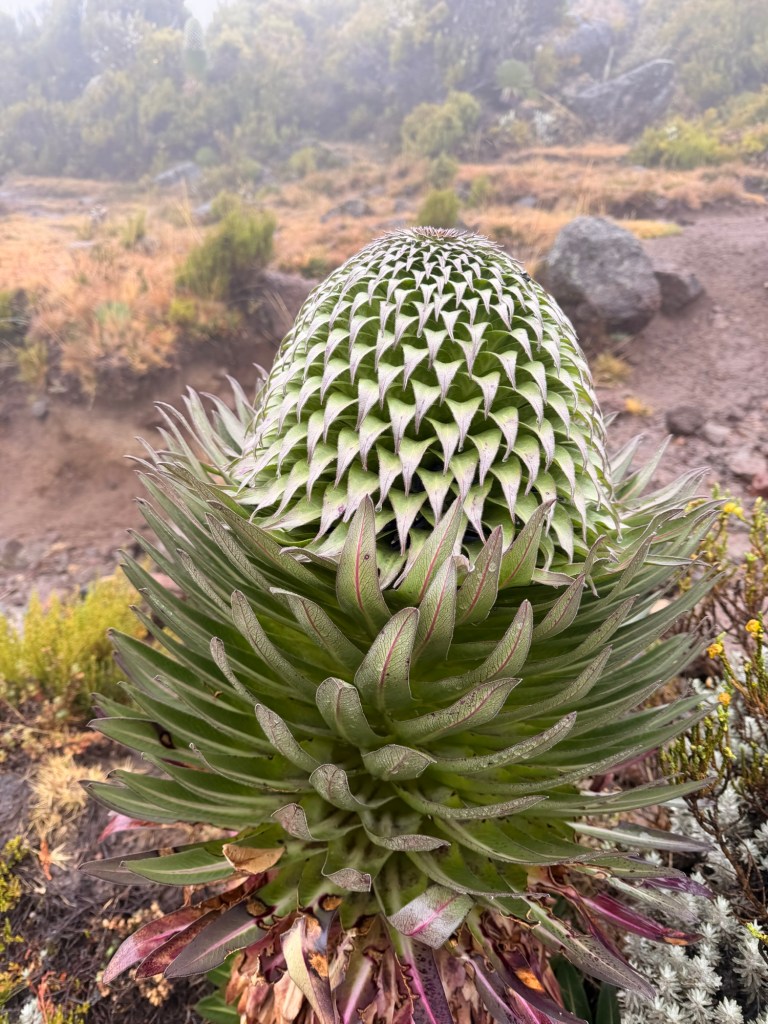
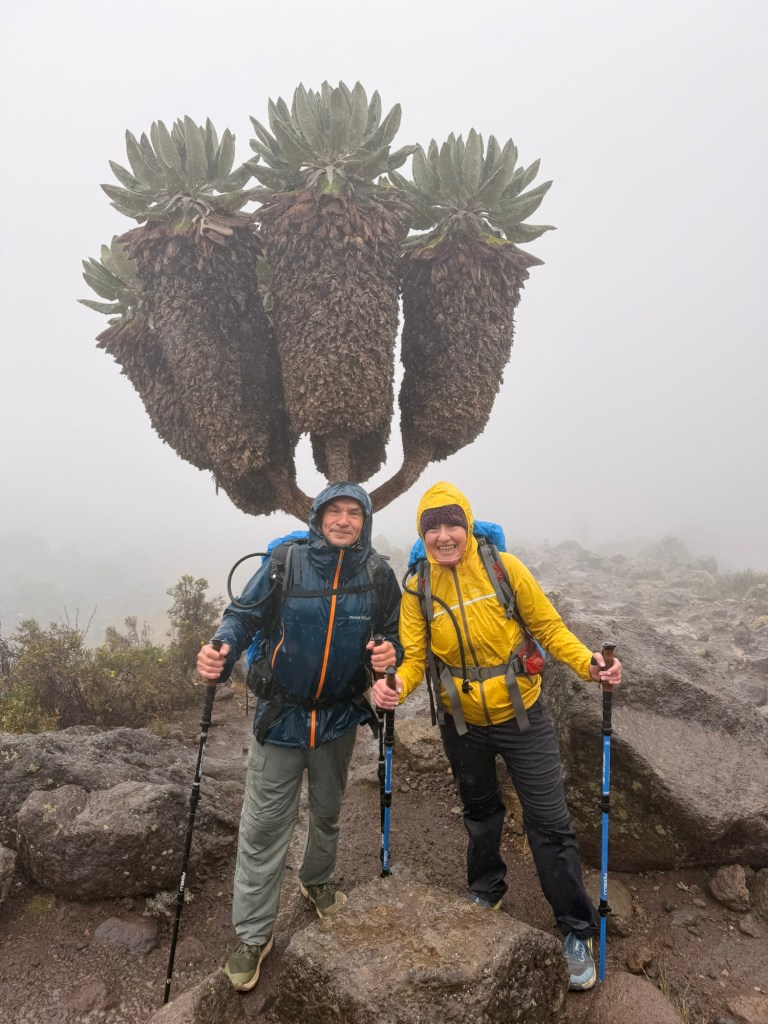
and the Giant Senecio (which starts out as a bush and eventually grows into a large tree).
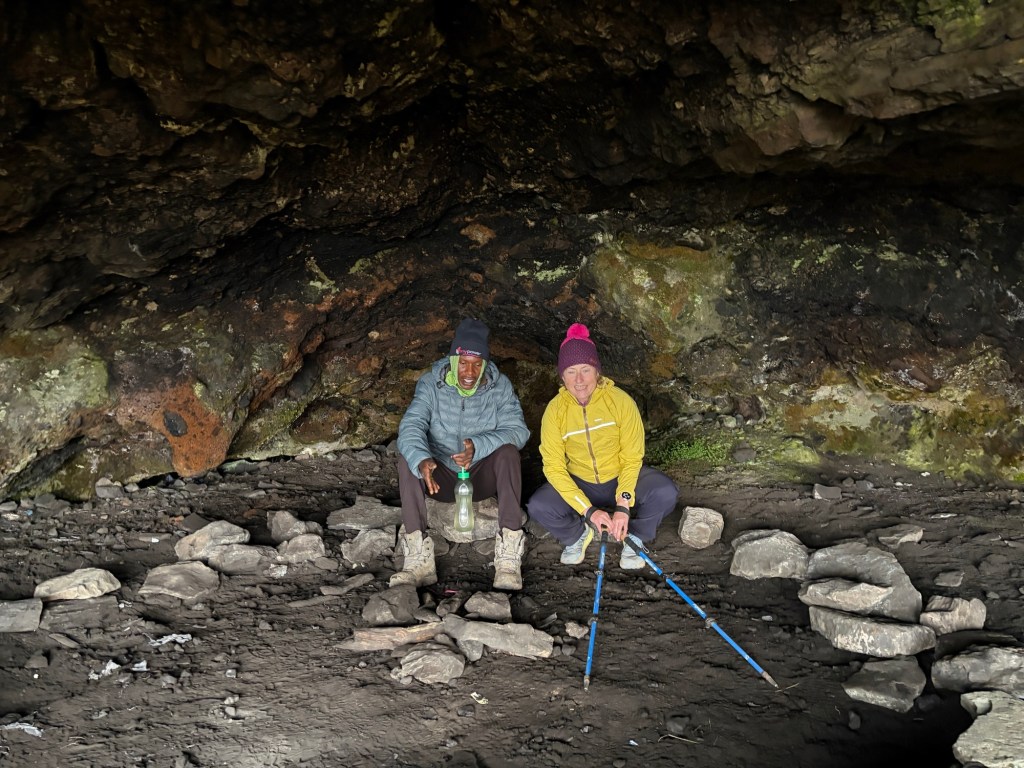
After a hot lunch at Shira Cave Camp and a short rest, we hiked up to see Shira Cave, located about 100 meters higher than the camp. Many years ago—back when Kili wasn’t so famous worldwide or heavily regulated—porters used this cave to sleep overnight. Since 1977, staying overnight at the cave has been strictly forbidden.
More than 30,000 tourists climb Kilimanjaro every year, which averages out to around 110 climbers a day (keeping in mind that the mountain is closed for a three-month rainy season). Add in the massive support teams, and that means there are about 400 to 500 people moving through the camps each day!
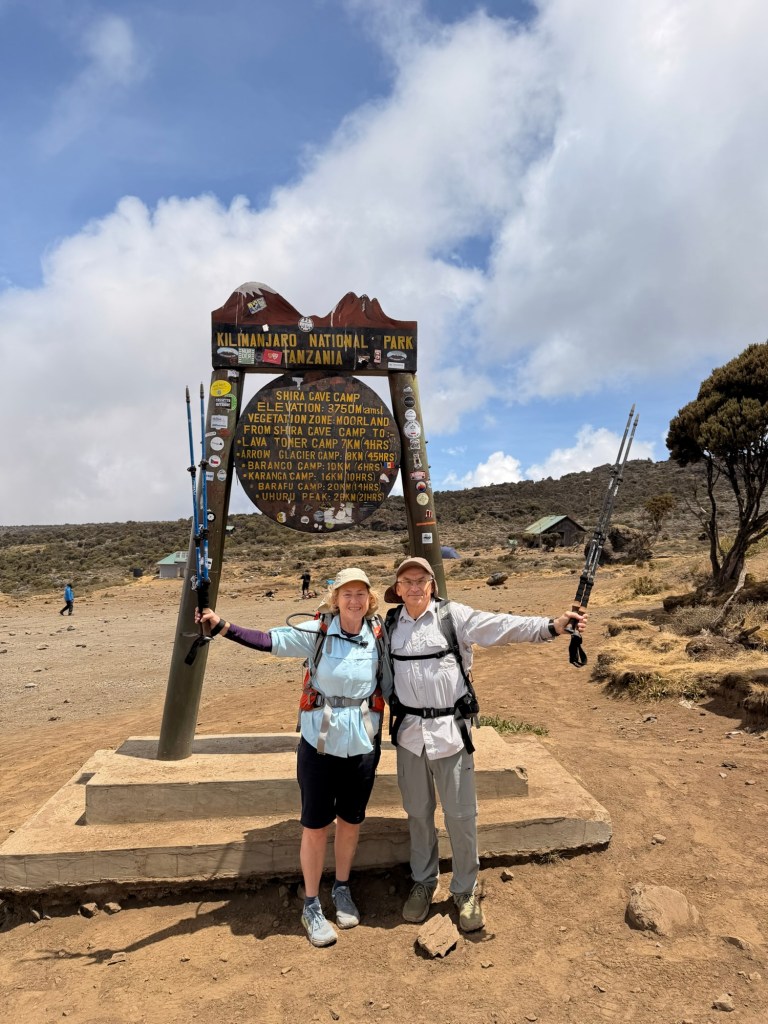
Day 3
Shira Cave Camp (3,850 m) to Barranco Camp (4,020 m) via Lava Tower (4,620 m)
Today was our key acclimatization day: “climb high, sleep low.” We hiked up to Lava Tower at 4,620 meters and stayed there for about three hours for lunch.
Leaving the moorland behind, we entered the alpine desert. The weather was definitely not on our side today—it rained heavily and relentlessly the entire way, leaving us completely soaked and cold. At one point, when we wrung out our socks, about a cup of water came out of them! Once again, we were deeply impressed by the Habari team, who set up a temporary camp right at Lava Tower to give us shelter and serve us a hot lunch.
Unfortunately, we couldn’t enjoy the majestic scenery of Lava Tower itself, as everything was blanketed in heavy fog and rain. The descent from Lava Tower down to Barranco Camp was tough and rocky, involving multiple river crossings. But we did it! It was a truly challenging day, but we stayed strong and optimistic. As a reward, the rain cleared up completely by 8:00 PM, revealing a crystal-clear sky filled with millions of stars. Wow!
On the bright side, the heavy rain had a major upside: it completely put out the ongoing wildfires on the mountain, allowing all closed routes to reopen.
Along the way, we learned both the official and unofficial stories about what caused the fires. Officially, it was blamed on a discarded cigarette. However, the locals don’t buy that explanation, pointing out that the fire originated far from any trails or villages. According to local belief, it was started by park rangers following government budget cuts, as a way to demand additional funds to extinguish it—a very sad story if true.

